
The Grid Method for Artists: How It Improves Accuracy, Confidence, and Composition
If you’ve ever looked at your reference photo and thought, Why doesn’t my drawing look like that? — you’re not alone.
The grid method is one of the most powerful and underrated tools for artists who want more accuracy, better proportions, and stronger compositions. It removes guesswork and replaces it with structure.
In this article, we’ll cover:
-
What the grid method is
-
Why it works
-
How to use it correctly
-
And why professional artists still rely on it today
What Is the Grid Method in Drawing?
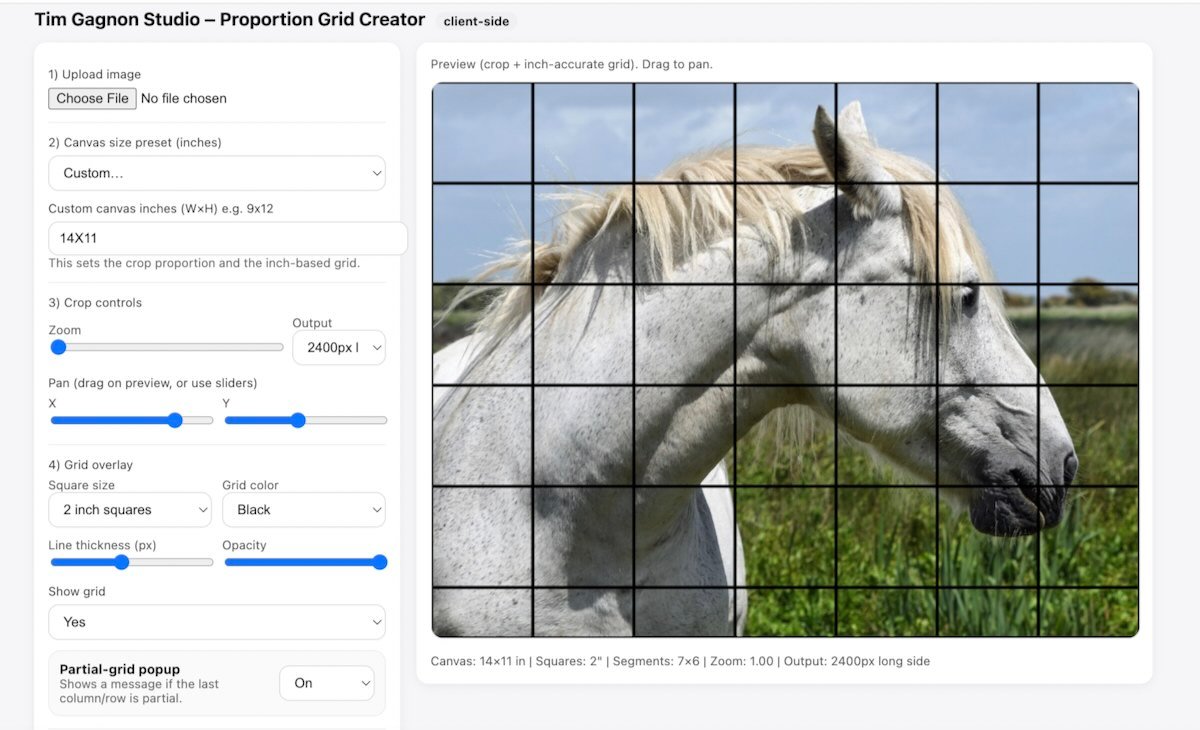
The grid method is a drawing technique where you divide both your reference photo and your canvas into evenly spaced squares. You then copy the contents of each square individually.
Instead of trying to “draw the whole thing,” you focus on:
-
One square at a time
-
One shape at a time
-
One relationship at a time
This dramatically improves drawing accuracy.
Why the Grid Method Improves Accuracy
Most drawing mistakes happen because artists try to judge proportions by eye too early.
Common errors:
-
Eyes placed too high
-
Head too wide
-
Buildings leaning
-
Horizon lines drifting
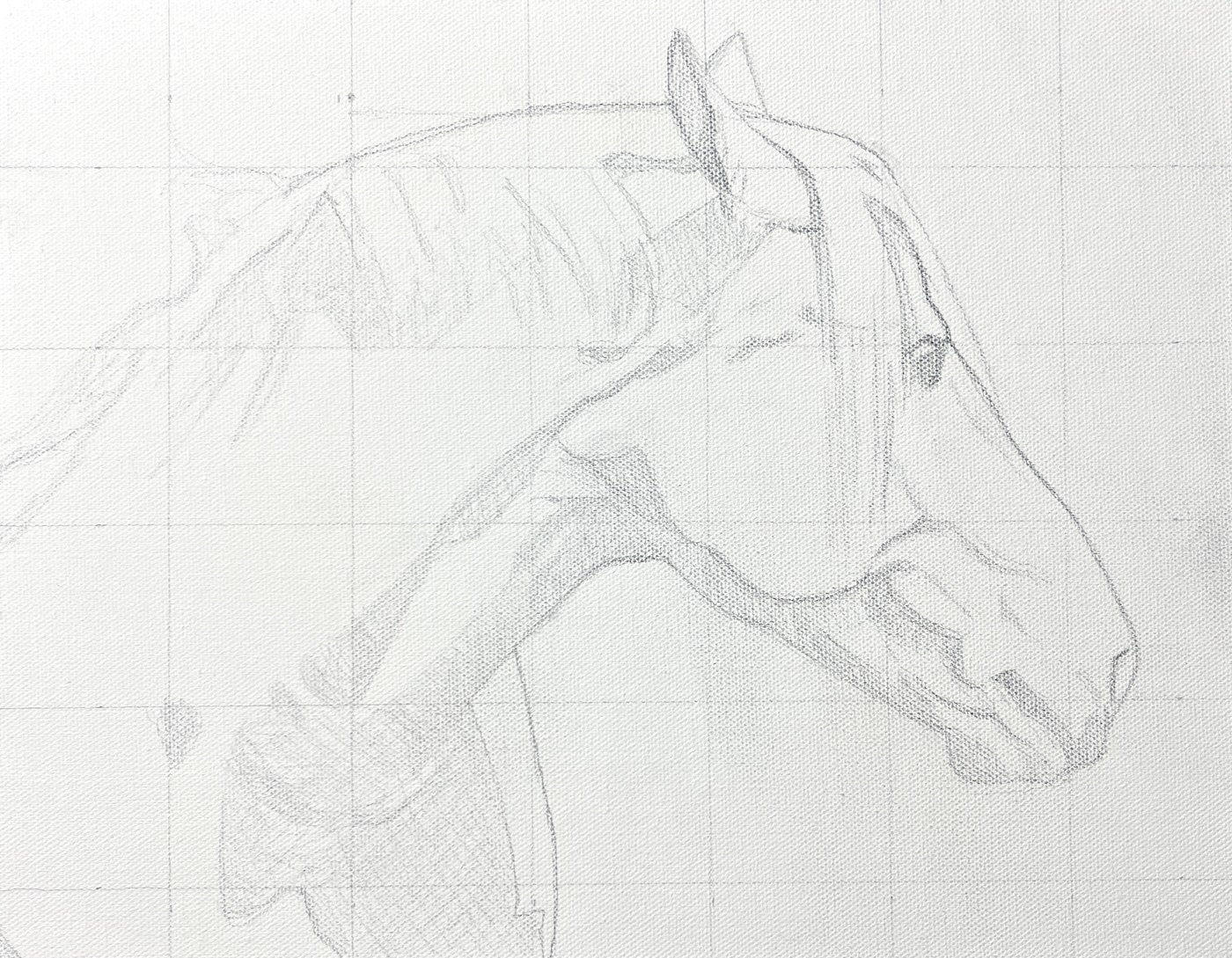
The grid method prevents this because it forces you to measure relationships.
Instead of asking:
“Does this look right?”
You ask:
“Where does this shape sit inside this square?”
It becomes objective instead of emotional.
That’s powerful.
The Psychological Benefit of the Grid Method
Here’s something rarely talked about:
The grid method reduces overwhelm.
Large subjects feel intimidating. But when broken into small sections, the task becomes manageable.
This builds confidence.
And confidence leads to better paintings.
How to Use the Grid Method Step by Step
-
Choose a clear reference photo.
-
Add a grid overlay to the image using the quick and easy grid creator tool on www.timgagnon.com
-
Draw a proportional grid on your canvas.
-
Work square by square.
-
Focus on shapes, not outlines.
-
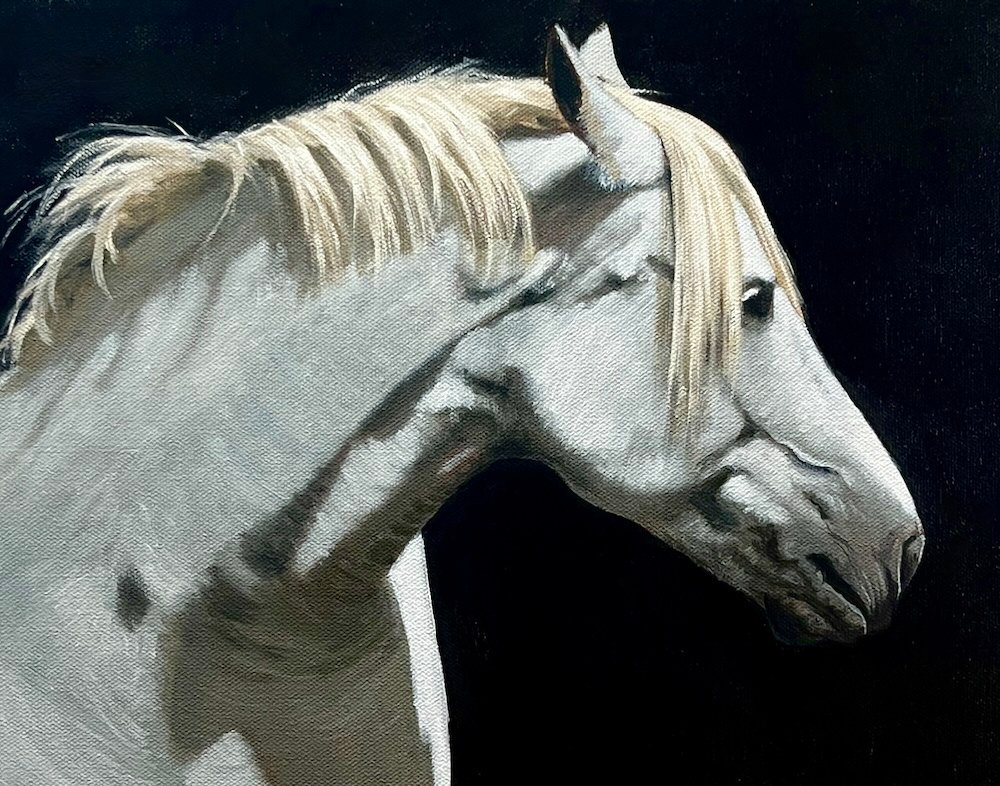
Remove the grid once the drawing is complete by toning the canvas
The key is drawing shapes inside each square — not tracing lines.
Does Using a Grid Make You Less of an Artist?
Short answer: No.
Using a grid doesn’t replace skill. It trains your eye.
Over time, artists internalize spatial relationships and need it less. But even experienced painters use it when accuracy matters.
Portrait artists.
Wildlife artists.
Landscape painters.
It’s a professional tool.
When Should You Use the Grid Method?
The grid method is especially helpful when:
-
Enlarging a small reference photo
-
Working on commissions
-
Painting portraits
-
Creating large canvases
-
Practicing drawing accuracy
It’s also ideal for beginners learning proportion.
Grid Method vs Freehand Drawing
Freehand drawing builds observation skills.
Grid drawing builds measurement skills.
The strongest artists develop both.
A Modern Way to Use the Grid Method
Traditionally, artists had to measure and draw grids manually.
Today, you can:
-
Upload a reference photo
-
Instantly generate a printable grid
-
Resize it to your exact canvas dimensions
This saves time and improves consistency.
You can use my grid creator tool and get a reference photo in a few clicks: https://timgagnon.com/shop/uncategorized/art-flow-tools-grid-creator-value-critique-color-finder-tonal-reference-stencil-maker/
Final Thoughts
The grid method isn’t cheating.
It’s structure.
And structure creates freedom in painting.
When your drawing is accurate, you can relax and focus on:
-
Color
-
Brushwork
-
Expression
-
Emotion
And that’s where the real art begins.
Frequently Asked Questions About the Grid Method for Artists
Is the grid method cheating?
No. The grid method is not cheating. It is a measurement tool.
Many professional artists use grids to scale drawings accurately, especially for portraits, commissions, and large canvases. The grid does not create the art for you. It simply helps maintain proportion and alignment.
The Old Masters relied on structured transfer systems, and modern artists continue that tradition. Skill still comes from observation, value control, and brushwork.
Did Renaissance artists use grids?
Yes. Renaissance artists used structured scaling systems that are closely related to the modern grid method.
Artists such as Leonardo da Vinci and Albrecht Dürer focused heavily on measurement, geometry, and proportion. Dürer even illustrated perspective devices that used grid frameworks to help artists draw accurately.
Large fresco painters used squaring systems and full-scale cartoons to transfer designs. The concept behind the grid method has deep historical roots. Read more about the old master’s techniques HERE.
What size grid should I use for my painting?
The ideal grid size depends on the level of detail in your reference photo and the size of your canvas.
-
For simple compositions, larger squares (1–2 inches) work well.
-
For portraits or detailed subjects, smaller squares provide better accuracy.
-
For large canvases, scaling proportionally is more important than the physical square size.
A good rule of thumb is: the more complex the subject, the smaller the grid squares should be.
Can professional artists use the grid method?
Absolutely.
Many professional artists use grids when:
-
Painting detailed portraits
-
Scaling up commissions
-
Creating murals
-
Working from complex photo references
The grid method improves efficiency and reduces drawing errors. Professionals often combine freehand skill with structured measurement depending on the project.
Will using a grid slow down my artistic growth?
No. In fact, it can accelerate growth.
The grid method helps train your eye to see shapes, angles, and value relationships more clearly. Over time, many artists find they rely less on the grid because their proportional accuracy improves naturally.
Using a grid builds visual awareness rather than replacing it.
How do I remove grid lines from my painting?
There are several simple approaches:
-
Use light pencil marks when drawing the grid.
-
Use a kneaded eraser to lighten lines before painting.
-
Allow thin paint layers to cover lines naturally.
-
Avoid pressing hard into the canvas surface.
If done lightly, grid lines disappear easily during the painting process.
Is the grid method good for beginners?
Yes. The grid method is especially helpful for beginners because it reduces frustration with proportion mistakes.
Instead of guessing placement, artists can focus on value, color, and brushwork. This builds confidence and allows faster progress.
Many beginners experience a major improvement in drawing accuracy after just a few grid-based paintings.